EN
EN
 VN
VN





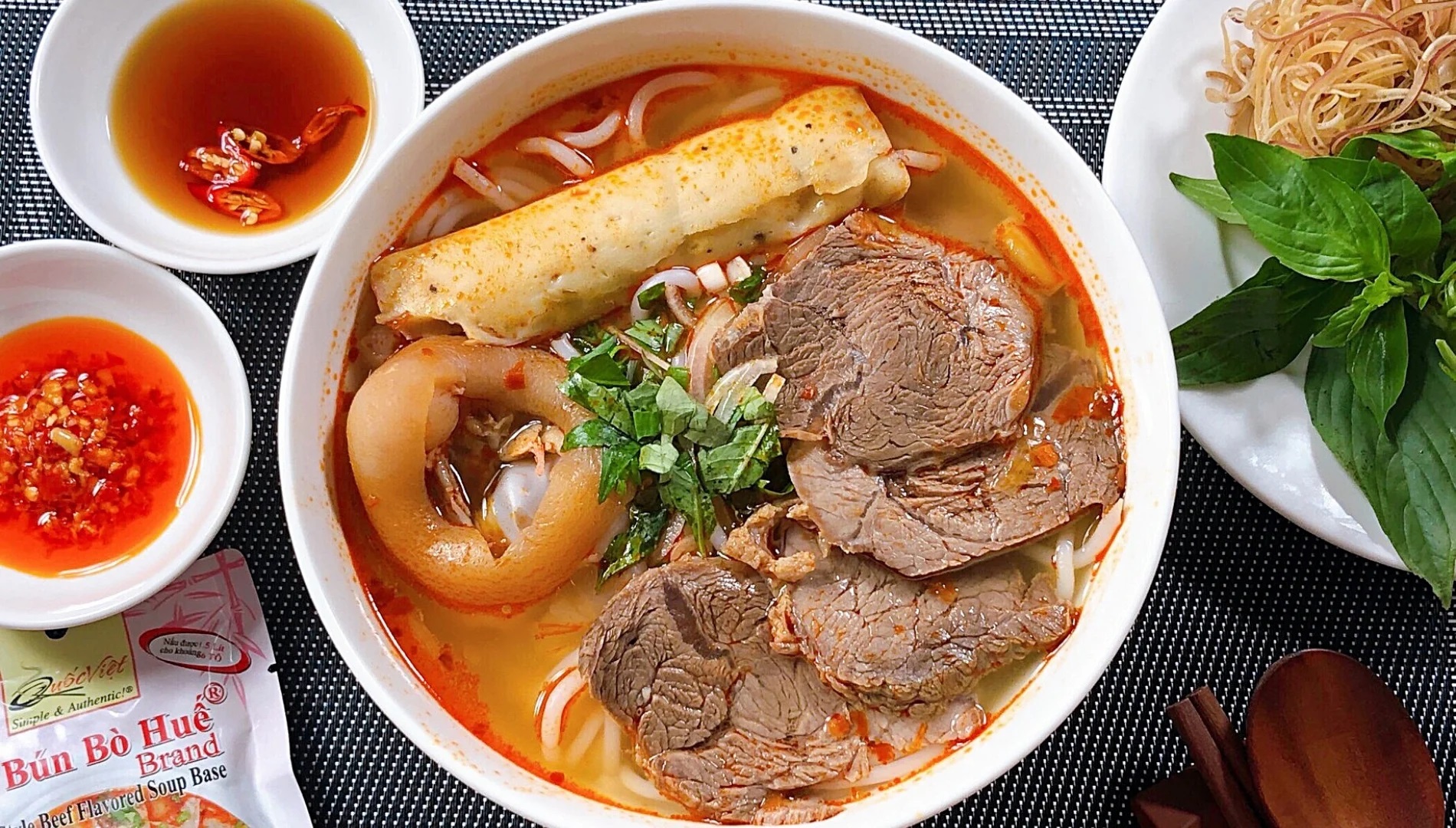
According to Hue culinary artisan Mai Thi Tra, 91, the dish traces its roots to spiritual rituals. In the past, after ceremonial offerings were made in village festivals, the leftover beef was cooked into a broth served with sticky rice.
As rice vermicelli became more popular, people replaced sticky rice with noodles. Over time, this shift gave rise to the dish we now know as bun bo Hue - spicy beef noodle soup. As it evolved, new toppings like pork knuckle, crab rolls, blood jelly, and herbs were added.
 |
Spicy beef noodle soup can be served with herbs and even rice. Photo courtesy of JourneysinHue |
A big reason for the dish's fame is Van Cu Village, where people have been making noodles for over 400 years. Their noodles are white, springy, and perfect for soaking up broth without falling apart, like they were made just for bun bo Hue.
Tra remembers how, back in the day, Hue women would cook the dish at home and carry it through the streets in baskets to sell. It was eaten all day long and became part of everyday life. Locals often call it the "soul" of Hue cuisine. Every cook has their own twist, so no two bowls are ever quite the same.
What makes bun bo Hue special is the broth. Beef bones are cleaned, boiled, then simmered uncovered. It is skimmed often to stay clear and sweet. Whole lemongrass adds fragrance, while mam ruoc - shrimp paste - brings a savory flavor without overpowering the soup.
A bowl usually has a slice of pork hock, some brisket or beef shank, and a chunk of blood jelly, all soaking in a red-orange broth. That color comes from chili oil. Chopped scallions are also added for a kick and a pop of green.
Vietnamese food expert Ho Dac Thieu Anh says bun bo Hue has to be spicy. That heat does not just come from chili oil, but also from lemongrass, chili sauce, and chilies soaked in fish sauce. The broth's sweetness, she adds, should come from the bones, not from added sugar.
 |
A broth pot full of crab rolls. Photo courtesy of Ho Ngoc Doan Khuong |
Another key to the dish's flavor is the pot it is cooked in. In Hue, many still use a traditional aluminum pot that looks like a clay one, with a round base and small opening. According to historian Tran Duc Anh Son, this shape helps hold heat and brings out the best in the broth. Some say soup ladled from these pots always tastes better.
Thieu Anh believes spicy beef noodle soup is also good for your health. In Eastern food philosophy, beef helps with blood circulation, pork hock boosts energy and clears toxins, and lemongrass aids digestion and fights off colds. It is a balanced dish, good for the body and satisfying for the soul.
Interestingly, people in Hue do not usually call it bun bo Hue. To them, it is simply bun bo - a normal part of their daily meals. It is only people from outside Hue, or visitors, who use the full name.
Bun bo Hue started as a street food and is now served worldwide, in the U.S., France, Canada, and Australia. Wherever it goes, "Hue" stays in the name, honoring its roots and tradition.